

How to Plan Your Everest Itinerary: From Lhasa via Shigatse to Base Camp
Mount Everest Base Camp is the closest most people will ever get to the top of the world. Starting from Lhasa, heading south through Shigatse, and climbing from an altitude of around 3,650 meters to about 5,200 meters, this journey requires careful planning regarding days, altitude acclimatization, best travel months, and costs. This guide breaks it all down so you can approach Mount Everest with both excitement and ease.
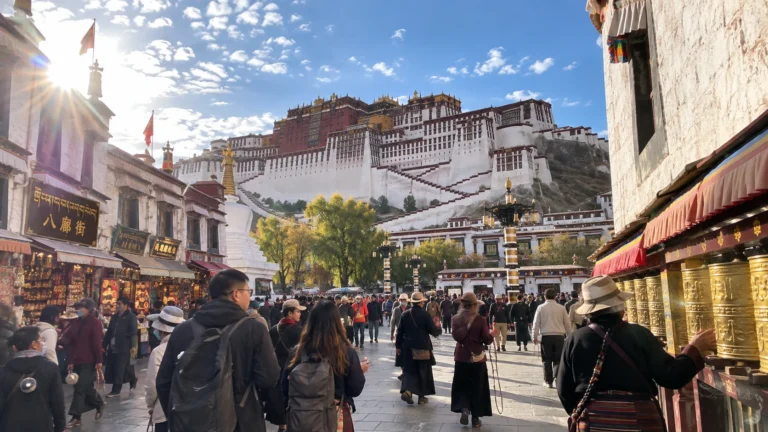
Most Everest itineraries starting from Lhasa take 4 to 5 days, typically following a route of Lhasa — Shigatse — Everest Base Camp — return (either via the same route or a loop). The drive from Lhasa to Shigatse spans about 280 kilometers, passing scenic spots like Yamdrok Lake and Karola Glacier. There is no need to rush on the first day, arriving in Shigatse (altitude ~3,800m) by evening to check in and let your body adapt to the medium altitude.
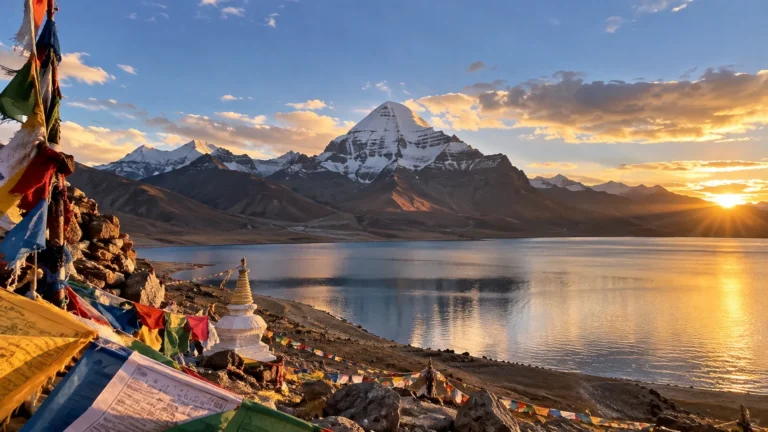
On the second day, you head further south from Shigatse toward the Everest scenic area via the Tingri region. The real physical test is the final stretch of winding mountain roads with numerous hairpin turns and a rapid elevation gain. It is advisable to keep water handy and pace your breathing. After arriving at Base Camp near Rongbuk Monastery, most travelers stay nearby overnight to catch the sunset and sunrise over Mount Everest, before heading back to Shigatse or Lhasa on the third day.
- 4-Day Version: Lhasa — Shigatse — Everest — Shigatse. A tighter schedule, ideal for travelers with limited vacation time.
- 5-Day Version: Lhasa — Shigatse — Everest — Lhasa. Allows extra stops at scenic spots along the way, making the pace more relaxed and providing a better buffer for altitude acclimatization.
The driving distance on long-distance routes is substantial, so it is best to view the journey as part of the travel experience—enjoying the valley and glacier views along the way rather than just rushing to the finish line.
Altitude Around 5,200 Meters: Physical Preparation and Essential Tips
The Everest Base Camp area sits at an altitude of about 5,200 meters—nearly 1,600 meters higher than Lhasa—making it the physically most demanding part of the entire trip. Most people will experience mild headaches, shortness of breath, or lighter sleep here, which is completely normal. The key is “slow”—walk slowly, speak slowly, avoid running or jumping, and don’t get overly excited.
Things you must pay attention to:
- Avoid strenuous activities after arriving at Base Camp, stick to gentle sightseeing, and do not take a shower on your first night.
- Nighttime temperatures drop drastically; even in summer, thick jackets and warm pants are essential. Windproof warmth beats everything else.
- If you experience severe headaches, vomiting, or breathing difficulties, descend to a lower altitude immediately and do not push through.
- Travelers with underlying heart or lung conditions should consult a doctor before departure to evaluate their fitness for the trip.
Tour guides from licensed travel agencies usually have hands-on experience dealing with high altitude and carry oxygen tanks on board. This is one of the main reasons to choose a guided tour for long-distance routes—if anyone feels unwell, professionals can assess and handle the situation immediately.
Seasons, Costs, and Accommodation Arrangements
- Best Season: The optimal travel seasons for the Everest region are from April to June and September to October, when the weather is stable and the chances of seeing the main peak of Everest are highest. July and August mark the rainy season with more clouds and mist, while winters are intensely cold with potential road closures due to snow. Always check current local road conditions before departure.
- Costs: Everest tour expenses mainly cover vehicles, accommodation, scenic area tickets, and driver/guide subsidies. Exact pricing depends on the duration and accommodation standards provided by the travel agency. It is best to clarify what is included and what is extra before signing up.
- Accommodation: Along the route in towns, opting for oxygen-enriched hotels can significantly improve nighttime sleep. Accommodations near Base Camp are much simpler and aimed strictly at keeping warm and resting, so lower your expectations for comfort and save your energy for the scenery.
Regarding documentation, foreign travelers and Taiwan compatriots heading to border regions like Everest may need to apply for relevant border permits in addition to the Tibet Travel Permit. Licensed travel agencies handle these combined applications alongside your Tibet Travel Permit and will notify you of required documents in advance.
Frequently Asked Questions (FAQ)
Q: Which months offer the best chance to see the main peak of Mount Everest?
A: April to June and September to October feature more stable weather, offering a higher probability of clear views of the peak. July and August bring rainy conditions with heavy clouds, making visibility unpredictable. Actual visibility depends entirely on current weather—a bit of luck is always part of seeing Everest.
Q: Is staying overnight at Everest Base Camp mandatory?
A: Not necessarily. If your body adapts well, staying overnight for sunrise and sunset offers the ultimate experience. However, if altitude sickness symptoms are pronounced, you can descend to Tingri or Shigatse for the night after a brief daytime visit. Safety always comes before ticking off a checklist; never force yourself just for a photo.
Q: Is Everest Base Camp too high for the average person to handle?
A: Most healthy travelers can adapt as long as they pace themselves, keep warm, and get enough rest. However, at around 5,200 meters, the physical strain is real. Be sure to spend one to two days acclimatizing in Lhasa and Shigatse first, and never rush straight up from lowlands.
Q: Do foreigners or Taiwanese travelers need extra documents for Everest?
A: Yes. In addition to the Tibet Travel Permit, the Everest region is a border area requiring additional permit procedures. It is recommended to have a licensed travel agency process everything together prior to departure to avoid getting blocked at checkpoints.
How to Plan Your Everest Base Camp Trip?
We are Lian Tong International Travel Service, deeply rooted in Tibet long-distance tourism for many years, providing professional service to Chinese-speaking travelers from Singapore, Malaysia, and Taiwan. Our Everest routes strictly adhere to a zero-shopping, pure-play policy—no forced shopping stops. We provide oxygen-equipped hotels, licensed vehicle fleets, experienced guides, and handle your Tibet Travel Permit and border formalities hassle-free. From Lhasa acclimatization to Shigatse and onward to Everest, every elevation step is managed with your physical well-being in mind. Feel free to contact us through our website, tell us your departure date and available days, and we will custom-tailor a safe, relaxed journey with a chance to witness the golden sunrise on Everest!